The serpent’s tongue: Luring the Python out of its den
July 14, 2026 · Talos Intelligence · Severity: HIGH
The article examines the full lifecycle of a Python package, from hosting to installation, highlighting how malicious packages and supply-chain attacks exploit trust in the ecosystem. It concludes with practical defensive measures such as dependency auditing tools and version pinning strategies to minimize risk.
- Python's popularity, readable syntax, and extensive third-party library ecosystem make it an attractive target for threat actors seeking to compromise developer devices and infrastructure.
- Malicious packages and supply-chain attacks are increasingly common, exploiting the trust built into Python's packaging ecosystem to execute payloads at the moment of installation, without any direct interaction from the victim.
- This blog examines the full lifecycle of a Python package, from hosting on repositories such as PyPI or custom web servers, through source and wheel distribution formats, to the final installation into virtual or system-wide Python environments. Each technique is assessed for persistence, supported build methods, and distribution compatibility.
- We conclude with practical defensive measures, including dependency auditing tools, version pinning strategies, installation time controls, and general best practices for minimizing supply-chain risk.
Due to the friendly nature of its syntax, extensive capabilities, and wide range of libraries, Python’s adoption by the developer community has been steadily increasing. Both the StackOverflow Developer Survey and the first party package repository PyPi’s download stats indicate rapidly growing usage, especially for data science, AI, and backend projects. Python has a very vibrant community of modules that can be easily installed using various package indexes. Unfortunately, this convenience comes with an additional burden. Malicious packages and supply chain infection are also increasingly common, as threat actors attempt to utilize these modules to infect as many victim devices as possible, abusing the very trust that the community is built upon. GitHub’s 2025 security data highlights the accelerating threat to the software supply chain, noting a 69% year-over-year increase in published malware advisories. Notably for Python developers, 17% of all reviewed advisories in the GitHub Advisory Database are now related to the Pip ecosystem, reflecting a significant targeting of Python-based environments. The threat actor group TeamPCP has also utilized software supply chain attacks, including misuse of Python modules, to compromise Microsoft’s GitHub subsidiary and carry out 20 “waves” of supply chain attacks according to Wired.
Users often believe that for a malicious payload to be executed they need to directly interact with the infected piece of code (e.g., providing it with a sensitive input, executing its entry point, or importing it to a working project). In reality, Python packages can establish a foothold simply through installation. While analyzing these techniques in detail, we will take a deeper look at the background process of package installation for Python. This will help understand the threat landscape for Python packages, including legitimate components adversaries try to alter for their benefit.
Journey of a Python package
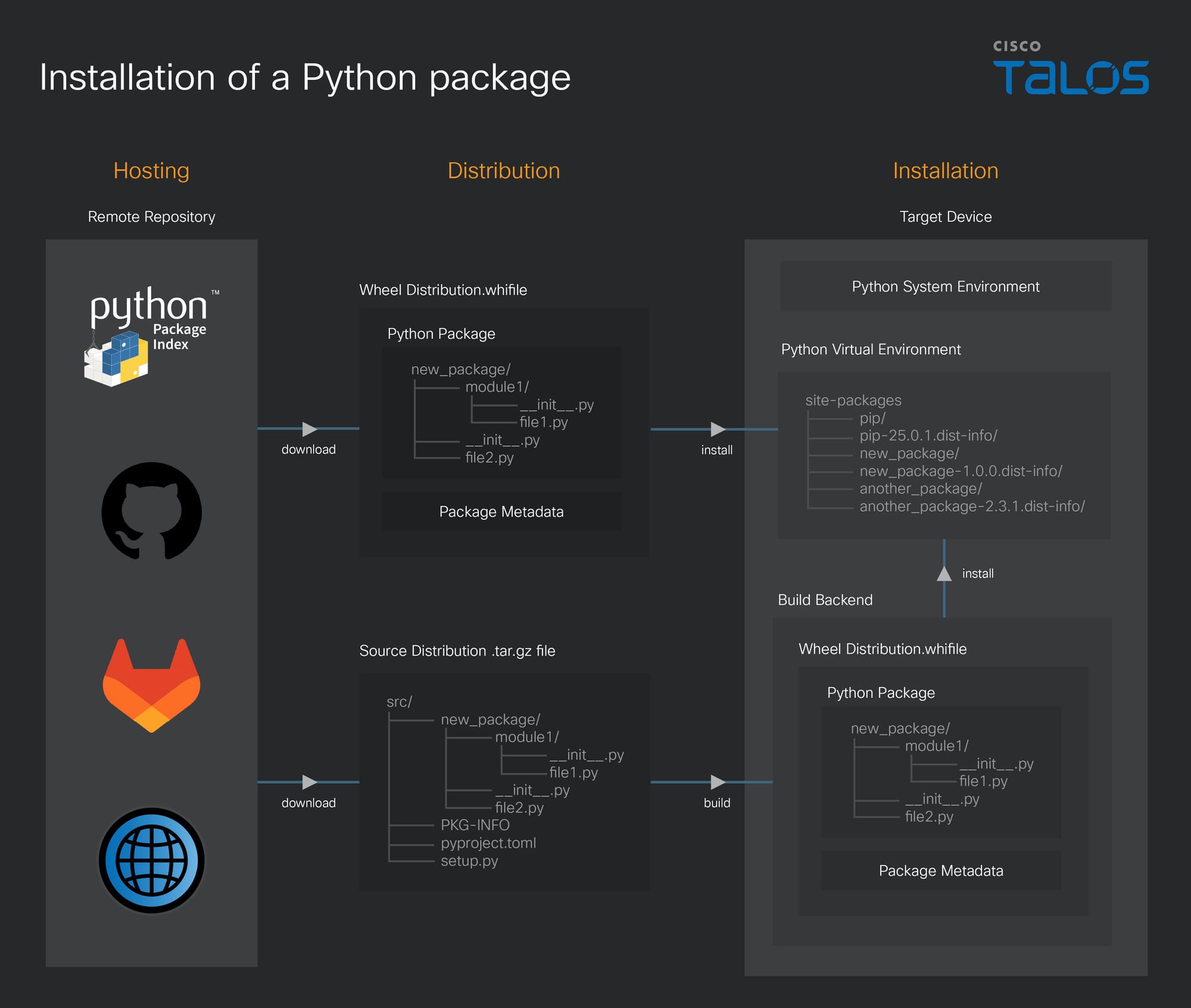
The process of moving a Python package from a remote repository to a local machine involves three distinct layers. While these layers are interconnected, they provide a useful abstraction for understanding the installation process:
- Hosting layer: Defines the location where the package is published
- Distribution layer: Specifies the file formats supported by the package
- Installation layer: Dictates the method of deployment for the package
Hosting packages
Python packages can be installed from various remote repositories.
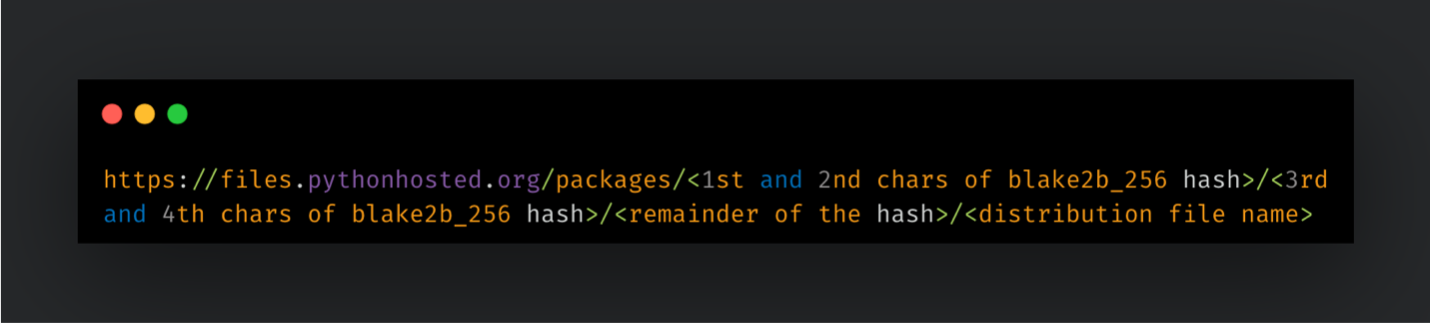
PyPI (Python Package Index): PyPI is the official repository for Python packages. The native package manager, pip, uses PyPI by default. Package details are accessible via a JSON API at “https://pypi.org/pypi/<package-name>/json”. During installation, the PyPI frontend redirects users to “files.pythonhosted.org”, where the actual files are stored. Download URLs are derived from the distribution file name and its blake2b_256 hash. For example:
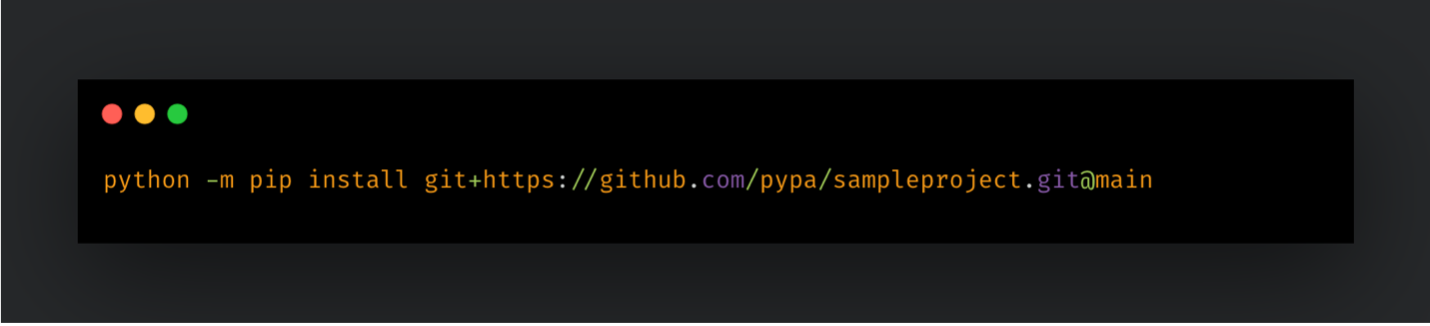
Version control systems (VCS): Projects hosted on platforms like GitHub or GitLab can be installed directly. This supports open source development through transparent issue tracking. A project can be installed using the following command:
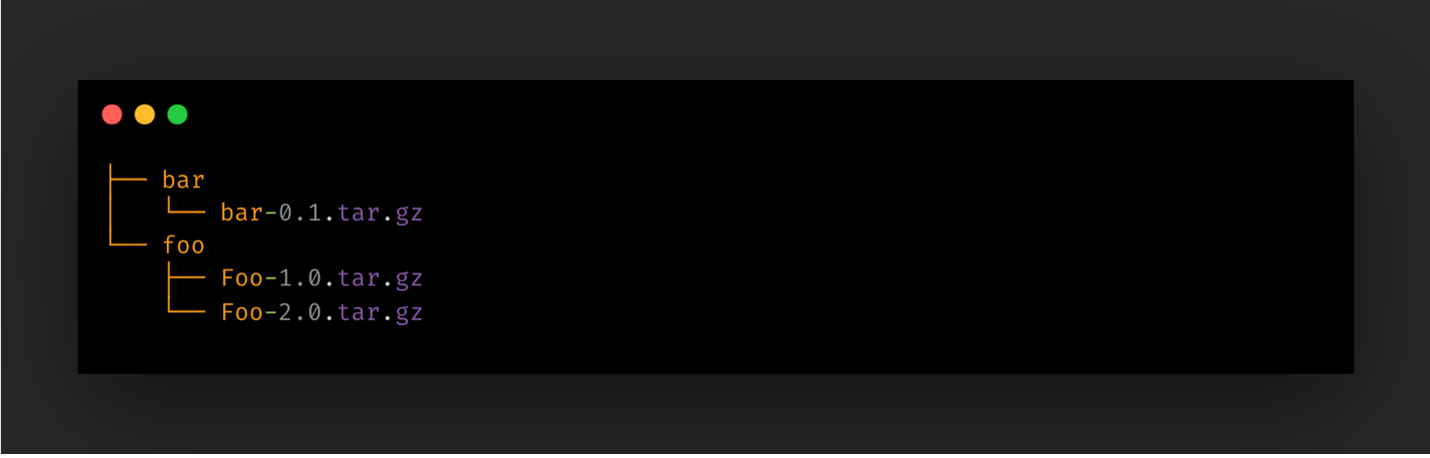
Custom web servers: Any web server with a suitable directory structure can serve as a repository. Packages must be hosted in folders using their normalized names, with all versions grouped together:
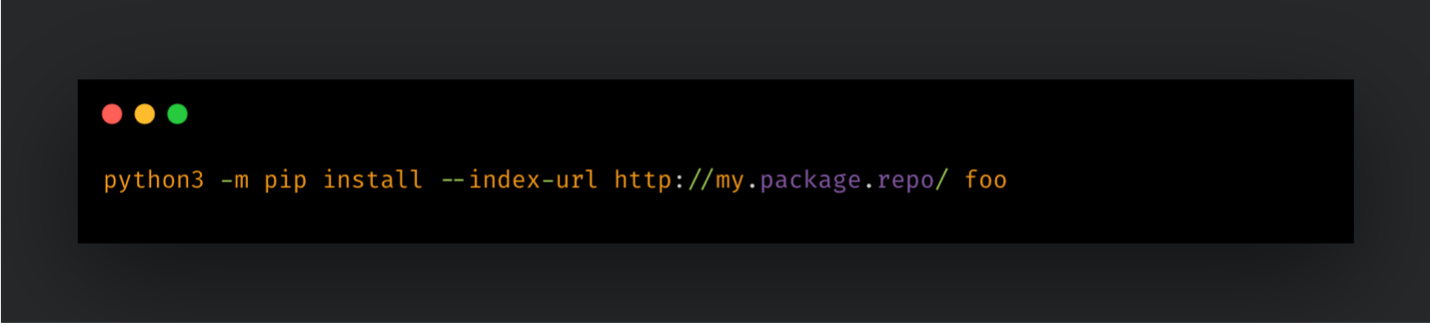
To use a custom repository, pip must be instructed to use a different index URL:
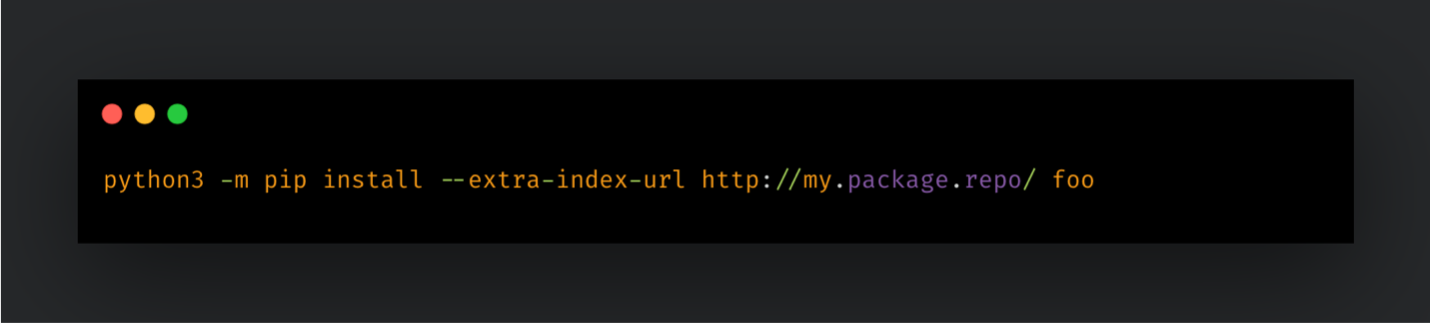
Alternatively, users can provide an extra index URL to search multiple repositories:
Key Takeaways
- Python's popularity and ecosystem make it a prime target for threat actors.
- Malicious packages exploit trust to execute payloads during installation without user interaction.
- Defensive measures include dependency auditing, version pinning, and installation time controls.