Ransomware incidents in Japan in the first half of 2026: Investigation of The Gentlemen’s infrastructure and evidence of Qilin's AI use
September 17, 2026 · Talos Intelligence · Severity: CRITICAL
Compared with the same period last year, ransomware incidents in Japan increased slightly by approximately 4.7%, indicating that ransomware continues to pose a significant threat. In Japan, The Gentlemen was the most active ransomware group in the first half of 2026. Attackers continue to primarily target small- and medium-sized enterprises, with organizations capitalized at less than JPY 1 billion accounting for approximately 80% of the total — an increase of around 13% from the previous year. The total number of listings on The Gentlemen’s leak site increased from 48 in January to 105 in July, representing approximately a 2.2-fold increase in activity. Additionally, there is a possibility that Russian-speaking individuals are involved in The Gentlemen’s attacks.
- Compared with the same period last year, ransomware incidents in Japan increased slightly by approximately 4.7%, indicating that ransomware continues to pose a significant threat.
- In Japan, The Gentlemen was the most active ransomware group in the first half of 2026.
- Attackers continue to primarily target small- and medium-sized enterprises, with organizations capitalized at less than JPY 1 billion accounting for approximately 80% of the total — an increase of around 13% from the previous year.
- The total number of listings on The Gentlemen’s leak site increased from 48 in January to 105 in July, representing approximately a 2.2-fold increase in activity. Additionally, there is a possibility that Russian-speaking individuals are involved in The Gentlemen’s attacks.
- Qilin, which recorded the second-highest number of observed incidents in 2026 after The Gentlemen, is leveraging AI to improve the efficiency of its operations.
Victimized companies
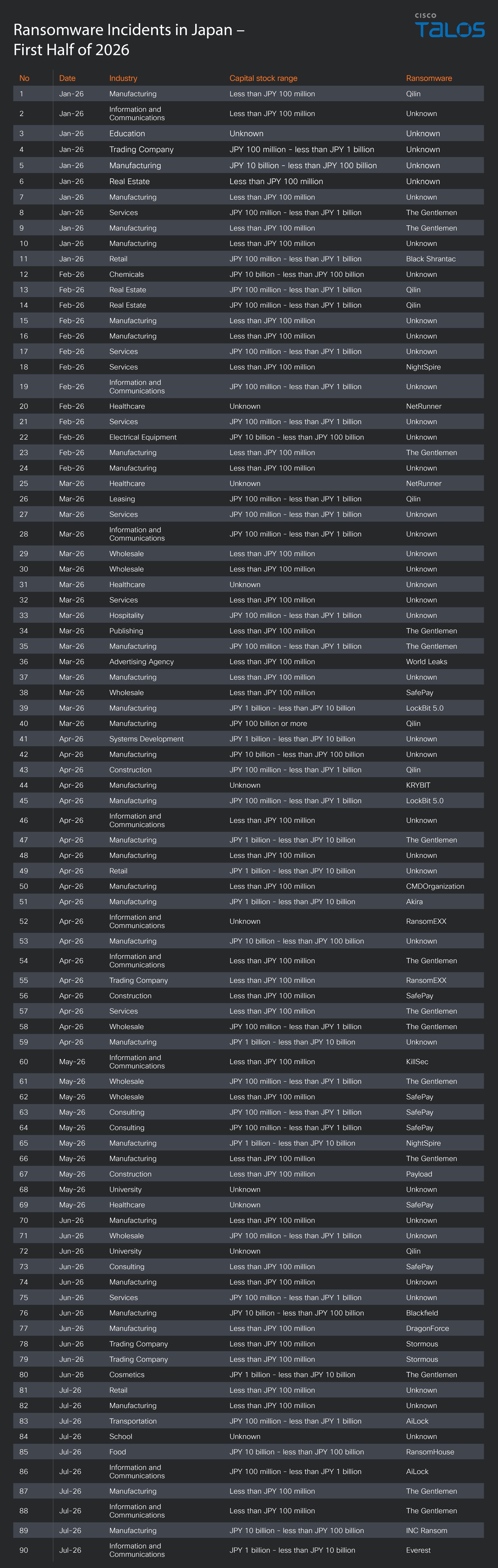
Figure 1 summarizes ransomware incidents affecting Japanese companies from January to July 2026. According to Cisco Talos research, 90 organizations in Japan were affected by ransomware during this period. Compared with 86 incidents during the same period from January to July last year, this represents a slight increase of approximately 4.7%, indicating that ransomware incidents continue to remain at a high level.
On a monthly basis, there were approximately 13 incidents per month on average. The number of incidents increased in March and April, with April recording the highest number during the period at 19 incidents.
Cases involving overseas offices and subsidiaries accounted for 13.3% of the total. Among these, Taiwan recorded the highest number of incidents, followed by the United States and the Philippines, which recorded the same number of incidents, with multiple cases identified in each country.
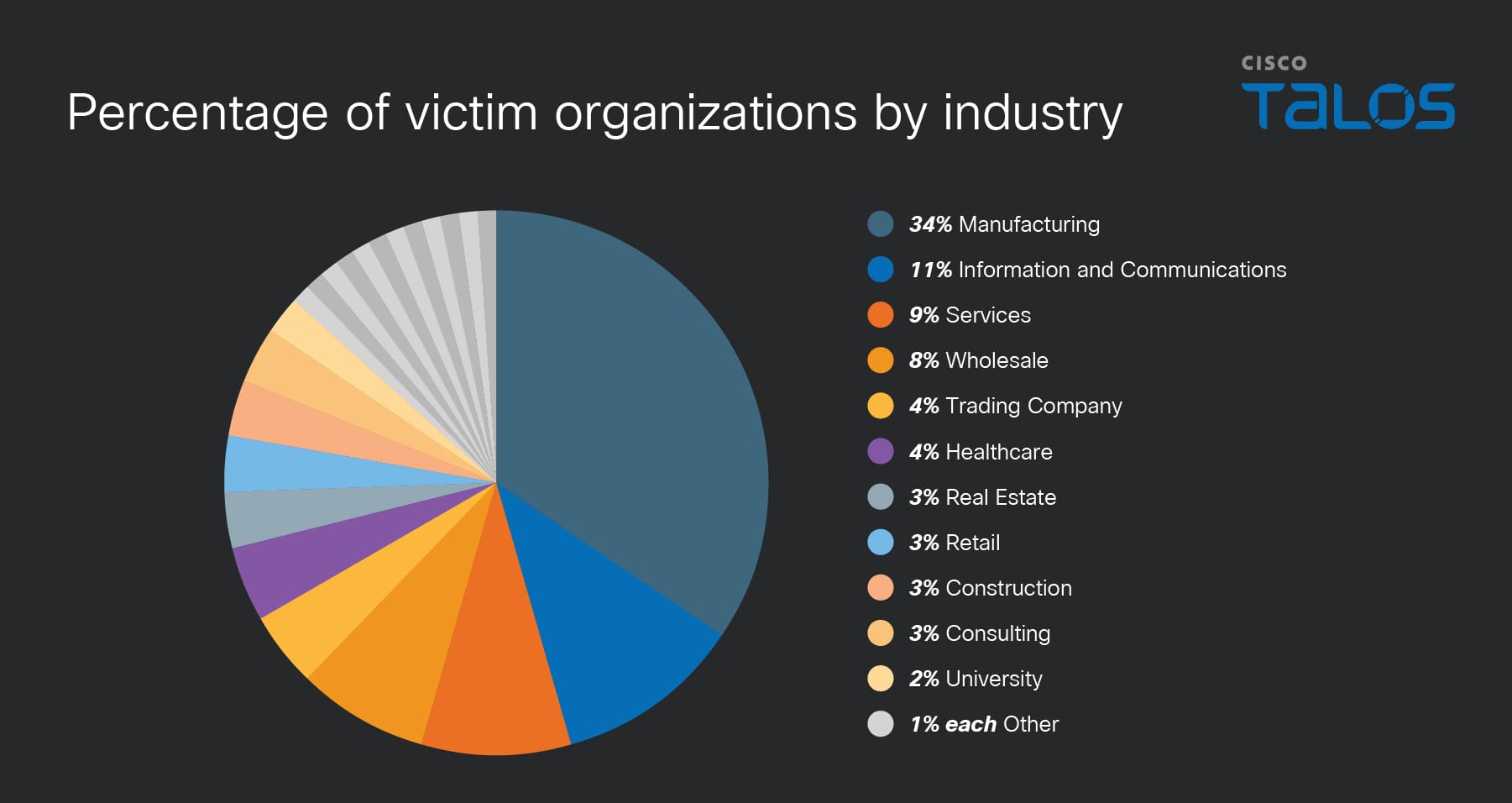
The manufacturing sector continued to be the most affected industry, accounting for 34% of incidents, followed by the information and communications sector at 11% and the services sector at 9% (see Figure 2).
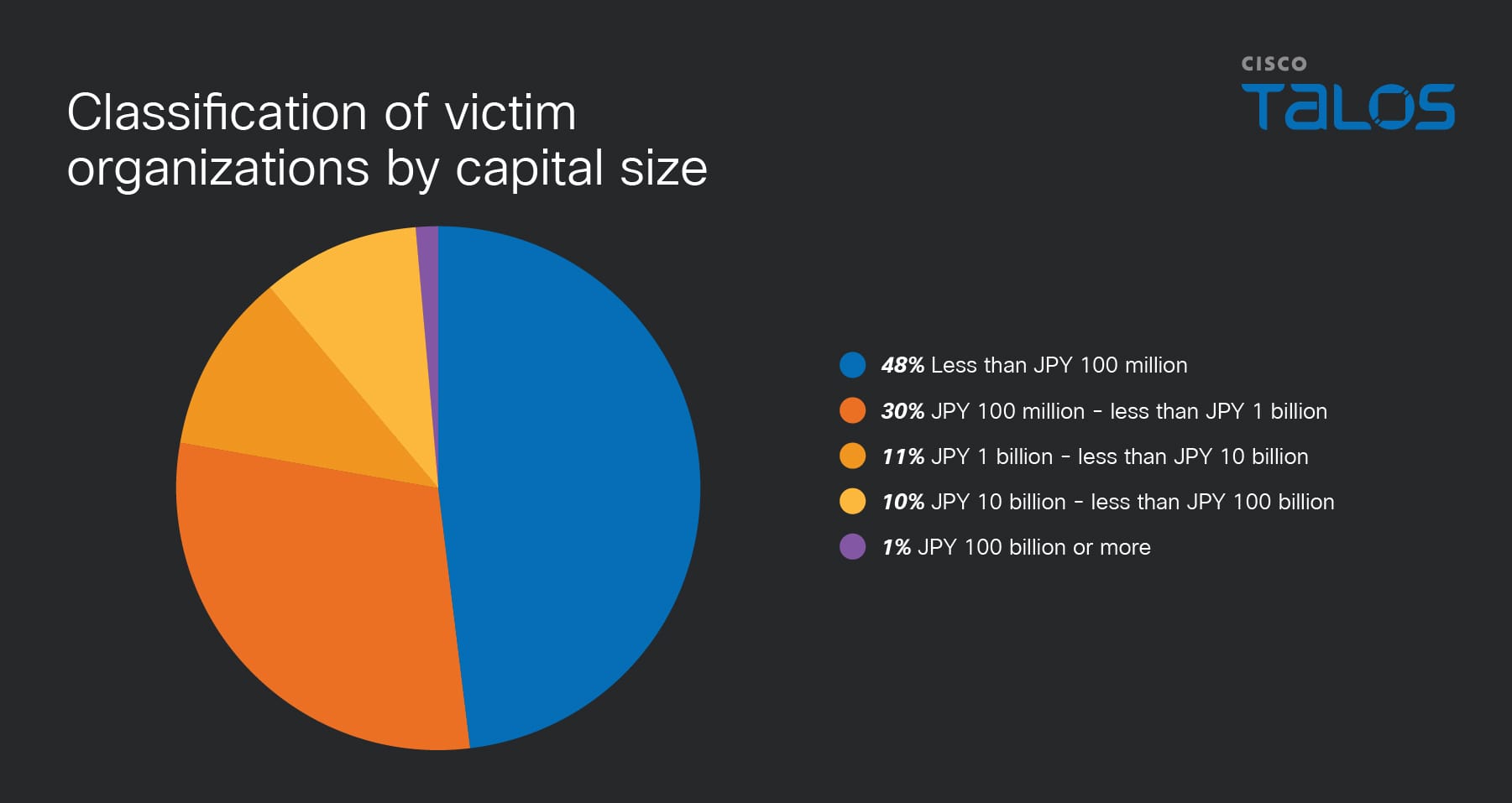
In terms of the size of the affected organizations, those with capital of less than JPY 100 million accounted for the largest share at 48%, followed by organizations with capital of JPY 100 million to less than JPY 1 billion at 30%. Combined, organizations with capital of less than JPY 1 billion accounted for 78% of the total, representing an increase of around 13% from 69% in 2025. This suggests that attackers are increasingly focusing their efforts on small- and medium-sized enterprises (see Figure 3).
Most frequently observed ransomware types in Japan
In Japan, the most frequently observed ransomware group in the first half of 2026 was The Gentlemen, with 14 incidents. This was followed by Qilin, which caused the highest number of incidents last year, and SafePay, which had relatively few confirmed incidents during the same period last year, with seven incidents each.
The Gentlemen and SafePay have increased their activity this year and can be considered emerging ransomware groups that require increased vigilance. Other ransomware groups observed include NightSpire, NetRunner, LockBit 5.0, RansomEXX, Stormous, and AiLock.
Looking at the ransomware groups observed this year, very few of the groups that were active during the same period last year have been observed, highlighting the rapid changes in the ransomware threat landscape.
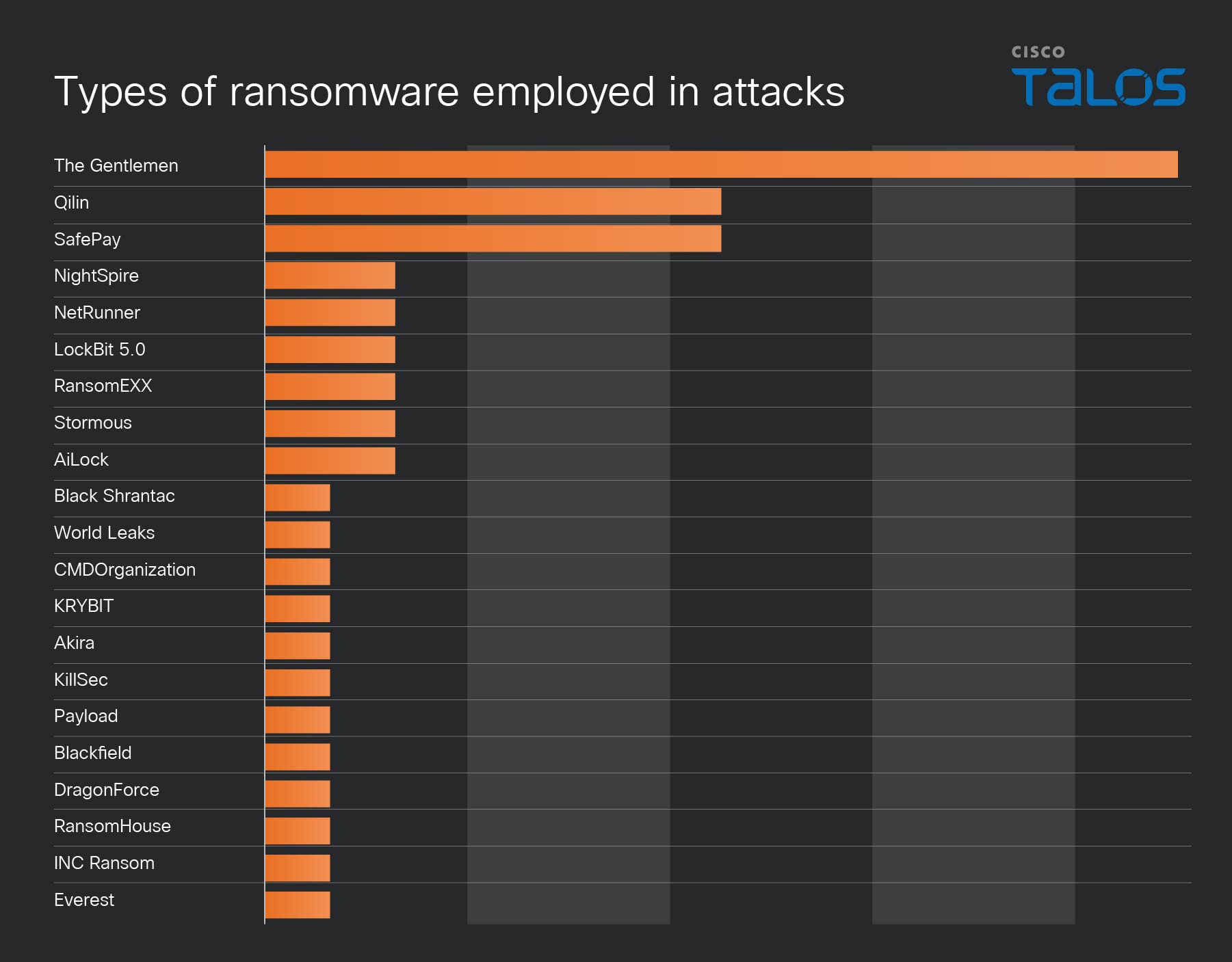
In the following sections, we examine the most prominent groups during the period, The Gentlemen and Qilin, and provide an overview of The Gentlemen, the tools it uses, attack flow and findings related to its attribution, as well as examining Qilin’s use of AI.
Overview of The Gentlemen ransomware
The Gentlemen ransomware group has been active since around July 2025. Although it is a relatively new group, it has been expanding its operations through a Ransomware-as-a-Service (RaaS) model and has already caused significant damage to organizations worldwide. The group uses a double-extortion strategy, encrypting victims’ data while also threatening to publish stolen information unless a ransom is paid.
Key Takeaways
- Compared with the same period last year, ransomware incidents in Japan increased slightly by approximately 4.
- 7%, indicating that ransomware continues to pose a significant threat.
- In Japan, The Gentlemen was the most active ransomware group in the first half of 2026.