NightEagle targets Russian companies
September 16, 2026 · Kaspersky (Securelist) · Severity: MEDIUM
Over the past year, the Global Emergency Response Team has investigated several incidents involving the NightEagle group, which has been active since at least 2023 and originally focused on intelligence gathering through credential theft and social engineering attacks.

Over the past year, our Global Emergency Response Team (GERT) has investigated several incidents involving the NightEagle group (APT-Q-95). This group has been active since at least 2023 and originally focused on organizations in Asia. We have now identified attacks by the group targeting businesses in Russia. This post examines both known and new tools NightEagle used in its latest campaign.
Initial access
In most incidents, the attackers used compromised valid credentials to gain access to corporate VPNs. VPN connections originated from IP addresses in the Russian segment linked to Cloudflare WARP tunnels, as well as from IP addresses associated with European virtual infrastructure providers.
GhostContainer on Microsoft Exchange
Both during the initial access stage and as the attack progressed, the attackers deployed the GhostContainer backdoor on Microsoft Exchange servers. It incorporates components from several open-source projects, including the Neo-reGeorg tunnel, an exploit for the CVE-2020-0688 vulnerability, and the GhostWebShell class from the ysoserial utility. All of these components are publicly available on GitHub.
We were unable to determine the exact method the attackers used to deliver the backdoor to Microsoft Exchange servers. We believe with a high degree of confidence that they applied a technique already familiar to us: extracting the cryptographic keys used by Microsoft Exchange from the ASP.NET configuration, overwriting the VIEWSTATE framework parameter, and injecting a payload into it, which then launched the GhostContainer backdoor in memory.
The backdoor is a .NET assembly containing three classes that implement its core functionality:
Stub: processes C2 commands delivered to the infected system through thex-owa-urlpostdataheaders and evades detection by the Antimalware Scan Interface (AMSI) and Windows Event Log mechanisms by overwriting addresses inamsi.dllandntdll.dll.App_Web_843e75cf5b63: accepts thefakePathandfakePageNameparameters and creates virtual paths that redirect requests to theApp_Web_8c9b251fb5b3class.App_Web_8c9b251fb5b3: implements network traffic redirection (proxying) and socket forwarding functionality.
Kaspersky products detect the GhostContainer backdoor as Trojan.MSIL.GhostContainer.gen.
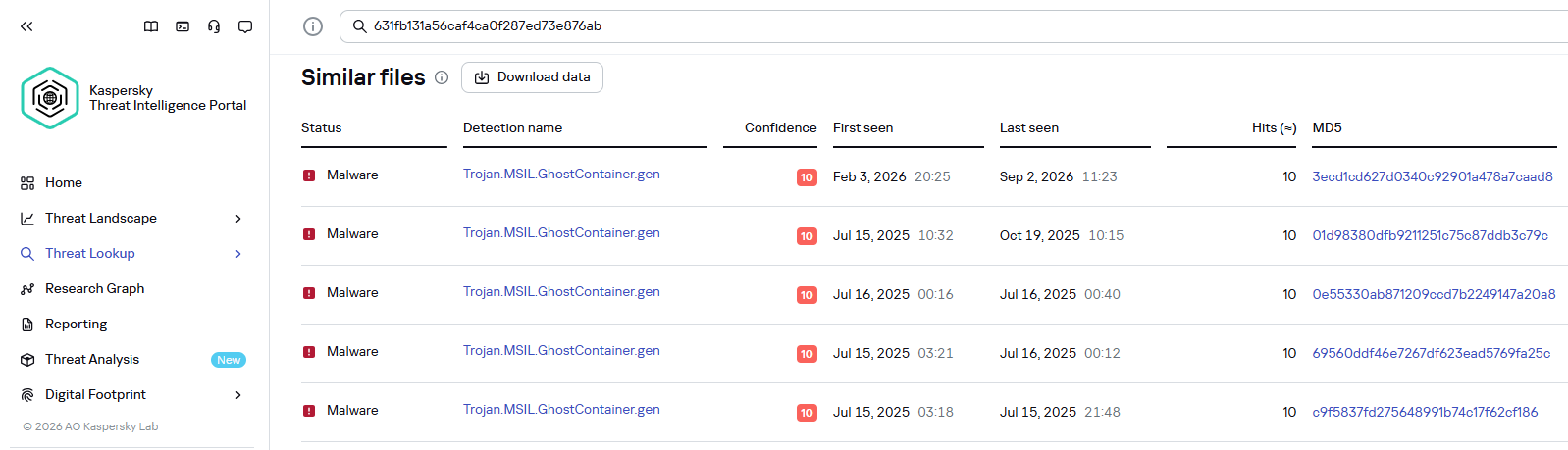
GhostContainer samples identified by the Similarity technology from Kaspersky Threat Analysis
Traffic redirection
Once the attackers gain sufficient privileges during an attack, they leverage RDP to move laterally within the internal network segment. To do this, they download and run tools for tunneling and redirecting network traffic.
The attackers used GitHub repositories to host their archived tools. The names of the repositories and archives were disguised to look legitimate:
- https://github[.]com/mirror-js/mirror-js/refs/heads/main/js/js-webpack.zip
- https://github[.]com/mirror-js/mirror-js/refs/heads/main/js/jsonp-pack.zip
- https://github[.]com/browserthemes/resourcepack/releases/download/main/resource-pack.zip
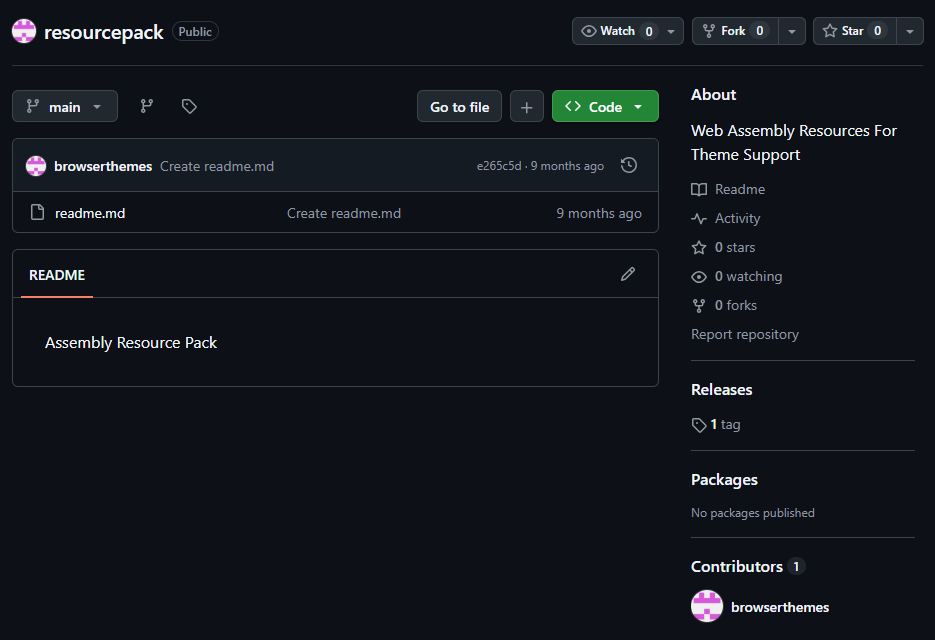
One of the repositories used for storing network tools
The files contained within the archives were also given names mimicking known legitimate software, though unrelated to the archive names:
adobe_32.exe;AdobeSync.exe;trueconf.exe;1cbroker.exe;1c-office-plugin.exe;trueconf-broker.exe.
Across the incidents we investigated, we found two tools that the attackers combined for traffic tunneling.
- Microsoft dev tunnels
This is a legitimate Microsoft mechanism that allows local web services to be published for internet access on*.*.devtunnels.msdomains. The attackers used this tunneling capability to expose port 3389 (RDP) on the compromi
Key Takeaways
- The NightEagle threat group has been actively targeting Russian organizations since at least 2023, focusing on intelligence gathering through credential theft and social engineering.
- Global Emergency Response Team investigations reveal that NightEagle operators use sophisticated phishing campaigns to gain initial access to targeted networks.
- The group's tactics include credential harvesting, lateral movement through compromised accounts, and exfiltration of sensitive business and operational data.