Love/hate relationship: The AI affair. Young people love AI, but it’s breaking their trust
August 11, 2026 · Malwarebytes · Severity: MEDIUM
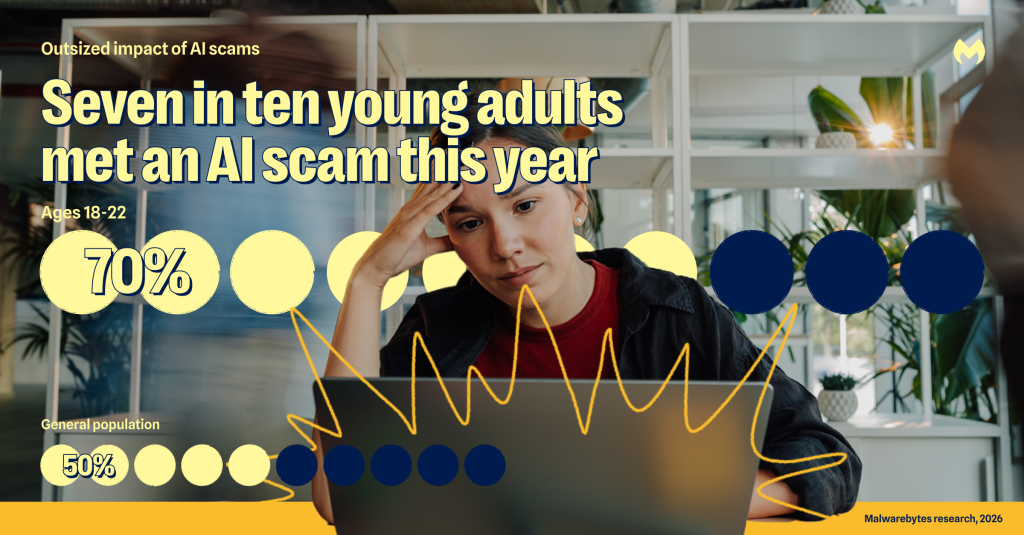
Young people have embraced AI for various tasks, but the technology also enables more convincing scams. A survey found that 70% of 18-to-22-year-olds experienced an AI-related scam, creating a new safety burden.
Young people use AI for everything. From schoolwork to interview prep, relationship advice to shopping decisions, the technology has become part of how young people live. For the most digitally fluent generation ever, AI is a competitive edge, a creative partner, and an always-on assistant.
But the same technology making young people’s lives easier is also making the internet harder to navigate. AI is making scams more convincing, identities easier to manipulate, and online content harder to trust. Seven in ten (70%) 18-to-22-year-olds have experienced an AI-related scam in the last year, compared to half of the general population. And nearly every young person worries AI will be used against them.
This isn’t happening because young people are reckless. It’s happening because the online platforms they rely on for everyday life now double as entry points for AI threats: social feeds where manipulated content and real content sit side by side, online marketplaces filled with fake storefronts and reviews, messaging channels where threats can be personalized, and AI tools that can make false information feel like the truth.
That creates a new kind of safety burden. Young people are being asked to use AI, judge its output, protect their identities, and avoid increasingly personalized scams all at once. The result is a digital life that feels more powerful, but also more vulnerable to abuse.
The internet is getting harder for young people to trust
The internet young people grew up with isn’t the same one they’re facing today. AI has changed the landscape, making it harder for even these digital natives to know what information is credible and safe. Half of 18-to-22-year-olds strongly agree that it’s becoming harder to tell what content is genuinely human or real.
Young people have had a front row seat to how AI can bend the truth. Nearly half have seen AI provide information they knew or later found out was wrong or misleading (44% versus 30% of the general population). Nearly one in four (23%) have suffered negative consequences because of AI advice, compared with 16% of the general population, and 18% say they have suffered emotionally from AI advice, compared with 12% of the general population. For a generation using AI in every corner of their lives, bad information can have lasting effects on their credibility, reputation, and relationships.
Many young people have changed how they engage online as a result:
- 47% of young people say AI has changed how much they trust reviews or content, compared with 37% of the general population
- 35% say AI has changed how they shop online, compared with 26%
- 32% say AI has changed how they present themselves professionally, compared with 20%
- 19% say AI has changed how they date or communicate romantically, compared with 10%
As one young person said about online dating:
“Dating isn’t an option for me online anymore. You just never know what is or isn’t AI, and I don’t want to spend a lot of time on someone fake.”
AI is making it easier for scams to reach young people
The harder it becomes to tell what is real, the easier it becomes for scams to work. For young people, AI is fueling a wave of scams that are more personal and invasive than ever before.
- Nearly one in four young people have been a victim of an extortion scam of some kind (24% versus 17% of the general population).
- Nearly one in five have been a victim of a deepfake or virtual kidnapping scam (19% versus 8%).
- Nearly one in ten have been a victim of sextortion (8% versus 7%).
- More than one in ten have been a victim of an impersonation scam (14% versus 10%).
- More than one in ten have been a victim of a romance scam (12% versus 10%).
What’s striking isn’t just how many young people have been victimized—it’s how many have been targeted:
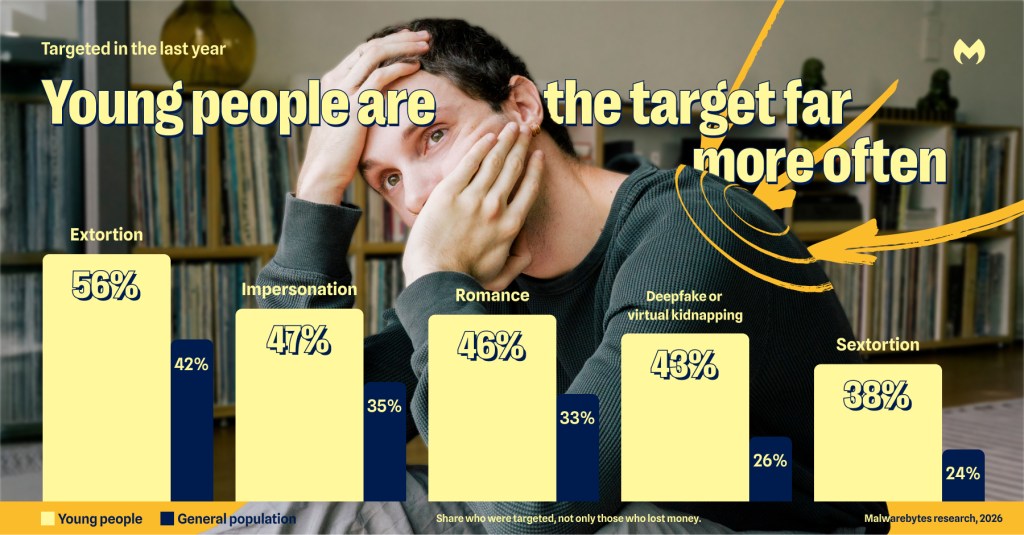
- More than half have been the target of an extortion scam (56% versus 42% of the general population).
- 47% have encountered an impersonation scam (versus 35%)
- 46% have encountered a romance scam (versus 33%).
- More than four in ten have been targeted by a deepfake or virtual kidnapping scam (43% versus 26%).
- Nearly four in ten have encountered sextortion (38% versus 24%).
These scams may look different on the surface, but they all work the same way: they exploit fear, trust, shame, and intimacy. The more often young people encounter them, the more chances scammers have to find exactly which emotional triggers work.
This exposure isn’t random. Young people are on social platforms at rates up to three times those of the general population: 89% use Instagram (versus 55% of the general population), 78% use TikTok (versus 38%), 68% use Snapchat (versus 26%), and 49% use Pinterest (versus 25%). Scammers can use these platforms to get everything they need to make their threats more convincing: public photos, friend networks, school affiliations, relationship clues, and everyday posts containing personal information. With AI, scammers can use that content to create explicit images, clone voices, impersonate profiles, and create threats personalized with details that are hard to ignore.
One young person shared their experience:
“I had someone make fake nudes of me using AI on my photos from my social media and threaten to post them on Facebook after I realized that they had scammed me. I decided to be more careful with my personal information.”
Young people fear AI will steal what money cannot replace: identity, reputation, and sense of self
AI-fueled scams aren’t just scams in the traditional sense. They are forms of identity abuse. This is different from traditional identity theft. For young people, the risk isn’t only that someone steals a password or money. It’s that scammers can use AI to make them appear to say, do, or share something they never did, with consequences that can follow them in their personal and professional lives.
That’s why young people are so concerned about AI being used against them. The fears that hit hardest:
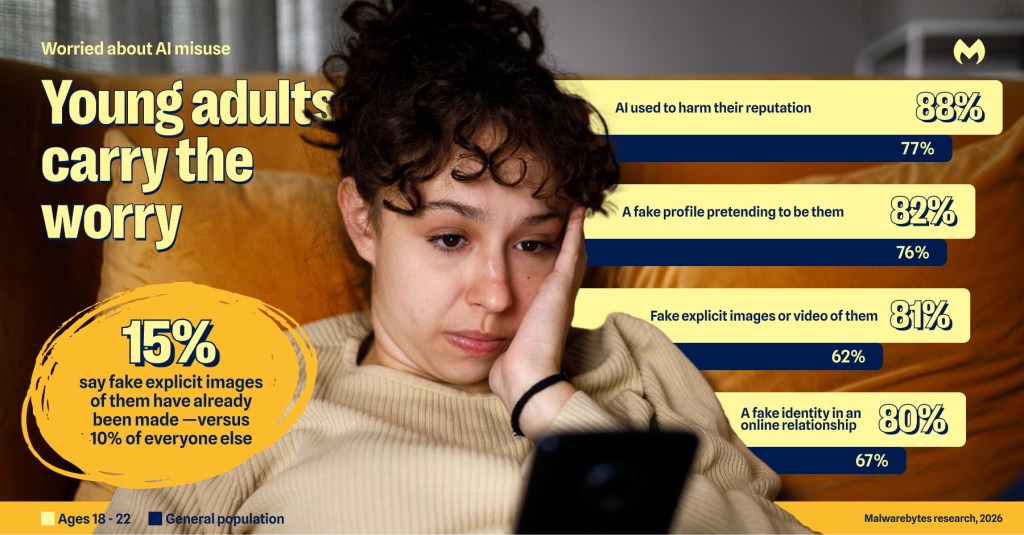
- 88% worry about AI being used to harm their professional or personal reputation versus 77% of the general population
- 82% worry about someone creating a fake profile pretending to be them versus 76%
- 81% worry about someone creating fake nude or sexually explicit photos or videos of them versus 62%; 15% say it’s happened to them already (versus 10%)
- 80% worry about being deceived by someone using AI to fake their identity in an online relationship versus 67%
These threats are especially powerful at a life stage where young people are still building their personal and professional reputations. A fake profile, manipulated image, or AI-generated explicit video can affect how everyone from classmates and professors to potential employers and romantic partners see them
Key Takeaways
- Young people widely use AI for school, work, and daily life.
- 70% of young adults encountered AI-related scams in the last year.
- AI makes online scams more convincing and harder to trust.