From Stars to Upvotes: Fake Reputation Fueling a Crypto Clipboard Hijacker
June 17, 2026 · Check Point Research · Severity: HIGH
Key Points The threat actor uses multiple channels to promote and distribute a Rust clipboard hijacker, starting with a dedicated phishing page as the central hub and extending to GitHub and SourceForge projects promoted by fake accounts. A dedicated YouTube channel, using AI‑generated narrators, suspicious view spikes, and highly positive (likely coordinated) comments, further reinforces the illusion of popularity and trustworthiness.
Key Points
- The threat actor uses multiple channels to promote and distribute a Rust clipboard hijacker, starting with a dedicated phishing page as the central hub and extending to GitHub and SourceForge projects promoted by fake accounts. A dedicated YouTube channel, using AI‑generated narrators, suspicious view spikes, and highly positive (likely coordinated) comments, further reinforces the illusion of popularity and trustworthiness.
- In addition, the threat actor’s tools were also promoted through posts on legitimate news websites. These articles appear to be either paid/promoted posts or content published via compromised news outlets, giving the malware extra legitimacy by placing it alongside trusted news content.
- The same illusion mechanism extends to VirusTotal, where some samples from this campaign receive benign votes and “safe” comments. Combined with the already low detection rate, this creates a misleading impression of safety that can influence both end users and reputation‑based detection systems.
Introduction
In this research, we analyze a clipboard hijacker campaign that is hidden inside a collection of “solutions” and “tools” that claim to give users an unfair advantage. These offers include Solana and Pump.fun sniper bots (automated tools that try to buy new tokens or meme coins faster than other traders), Aviator Predictor (software that claims to predict the outcome of the popular “Aviator” multiplier game), and several crash‑game “predictors” (programs that supposedly forecast when online betting games will stop and “crash”). The operation mainly targets users who are looking for shortcuts and quick profits—particularly crypto owners and online crash‑game gamblers and traders who are attracted by promises of automated gains and “predictable” outcomes.
To make this operation look legitimate and attractive, the threat actor has built an ecosystem across several platforms. A WordPress phishing site serves as the main landing page, while GitHub and SourceForge projects are used to host and distribute the files. These repositories show inflated engagement—such as high numbers of stars, forks, ratings, and downloads—likely generated by “Ghost Networks” of fake accounts. A YouTube channel, featuring AI‑generated narrators and suspicious spikes in views, promotes the same tools and adds another layer of social proof. In addition, the actor abuses sentiment and reputation signals on VirusTotal, where some samples from this campaign receive benign votes and “safe” comments. Combined with the already low detection rate, this creates a misleading impression of safety that can influence both end users and reputation‑based detection systems.
Behind this social‑engineering and promotion layer, the actual payloads delivered to victims are Rust‑based clipboard hijackers for both Windows and macOS. These binaries install persistence, continuously monitor the clipboard for strings that look like cryptocurrency wallet addresses, and replace them with attacker‑controlled wallets from large, embedded lists. The attacker‑controlled cryptocurrency wallets appear to have received multiple transactions, providing the actor with notable illicit gains.
Phishing Page
This phishing website promotes a mix of “edge” tools that all promise easy, unfair advantages. On one side, Solana / Pump.fun / DEX sniper bots claim they can automatically buy and sell new meme coins faster than other traders. On the other, Aviator Predictor and several Crash Predictors pretend to “decode” or “predict” crash‑game results so users can supposedly win more often. In most cases, victims are funneled to this site through links shared on social media, crypto forums, and Telegram channels. The clear targets are crypto owners, gamblers, and traders who are already looking for shortcuts and quick, automated gains.
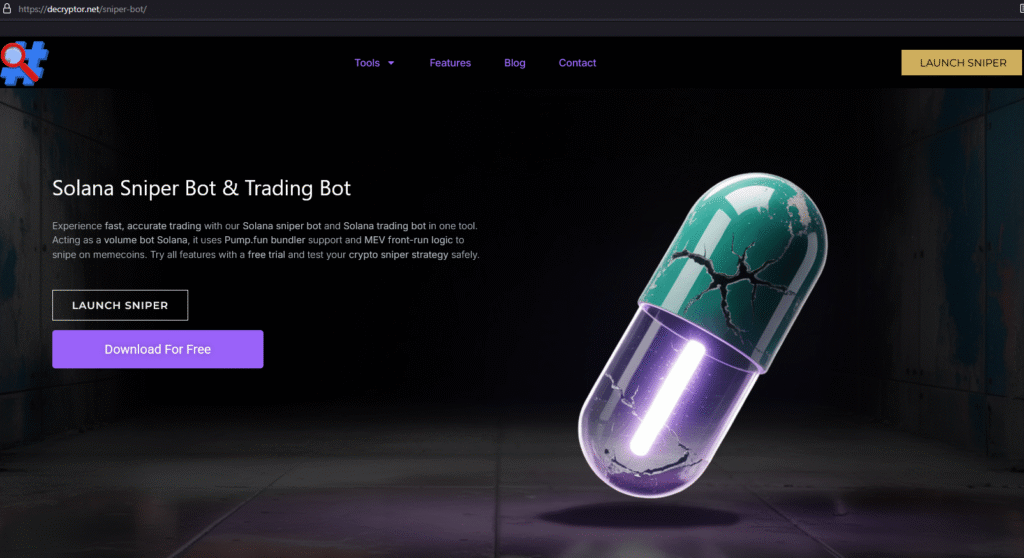
The WordPress author is @JoseCmanXD, and the same name is used for the Telegram contact provided on the website.

From the website, the actor provides links to GitHub, SourceForge, and YouTube. Across these platforms, the associated content shows inflated engagement, including likely manipulated views and interactions, making the tools appear more popular and trustworthy than they really are.
This inflated engagement appears to be driven by the threat actor’s use of multiple Ghost Networks on each platform. These Ghost Networks consist of fake or low-quality accounts and channels that repeatedly promote his tools, boost view counts, and generate likes or comments, thereby creating a false sense of credibility and social proof for potential victims.
GitHub & SourceForge
The actor appears to operate at least six GitHub accounts to promote and distribute his malicious software. These accounts also seem to collaborate with each other, as they are sometimes listed as contributors to one another’s repositories.
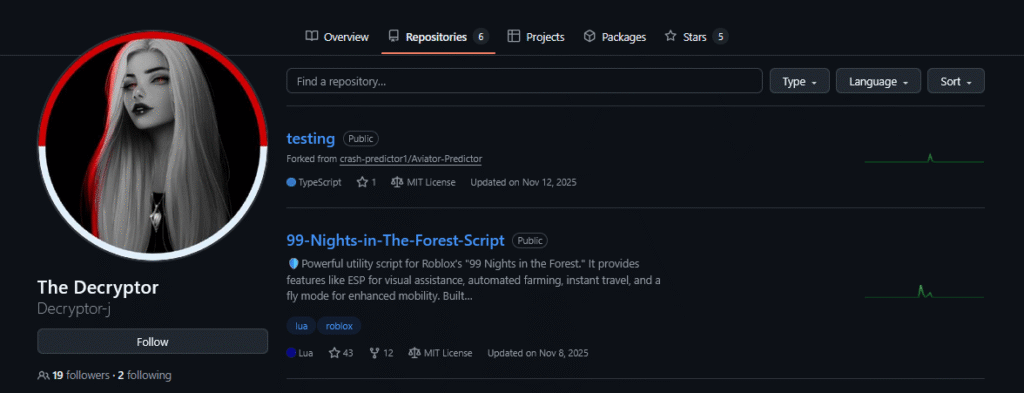
The main accounts attributed to the threat actor are Decryptor-j, crash-predictor1, roblox-script1, hack-scripts, and stake-mines. Many of their repositories have received multiple stars and forks from various accounts. This activity appears to be the result of the threat actor’s use of GitHub Ghost Networks, where controlled or fake accounts repeatedly star and fork the repositories to create an illusion of popularity and trustworthiness.
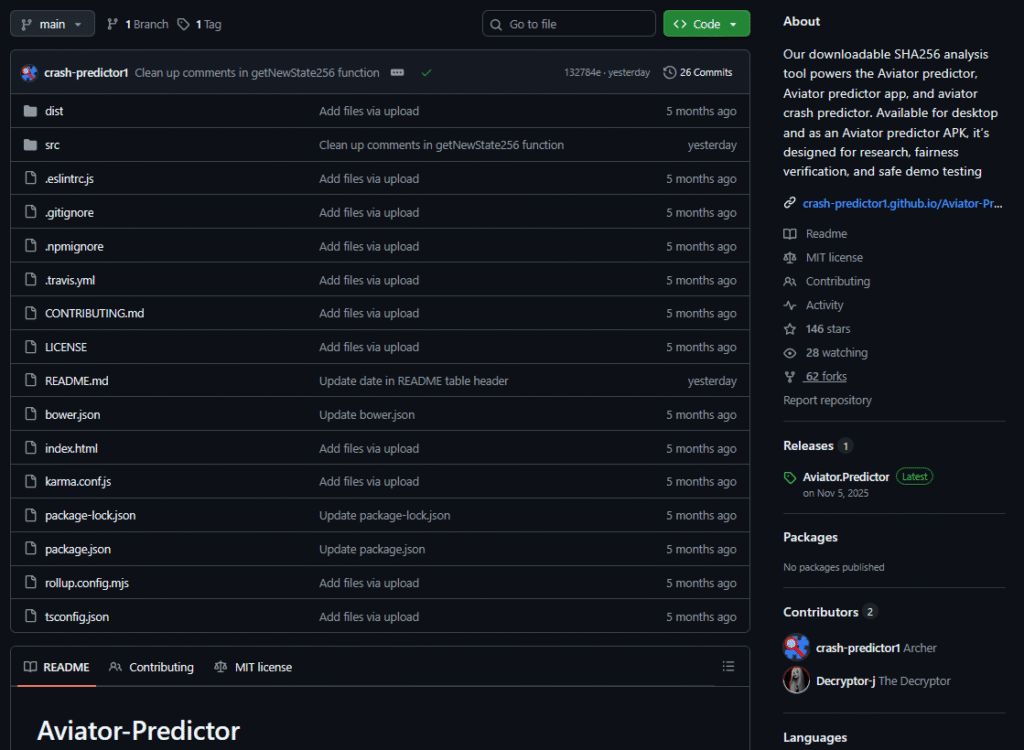
In total, just from GitHub, there appear to be just over 5,000 downloads and potential infections originating from the accounts mentioned above. Of these, over 1,250 downloads are associated with the macOS version of the promoted software “Aviator Predictor”, also indicating an impact on Mac users. When we also consider downloads origi
Key Takeaways
- A Rust-based clipboard hijacker targets cryptocurrency users by replacing copied wallet addresses during transactions.
- The threat actor uses fake GitHub and SourceForge projects promoted by phony accounts to distribute malware.
- A dedicated YouTube channel with AI-generated narrators helps promote the crypto clipboard hijacker.